
Mobile Solar Power Containers: A New Era of Flexible Clean Energy


How Deployable Solar Microgrids Are Changing the Way We Think About Power
When most people think about solar energy, they picture rooftop solar panels on homes or large solar farms connected to the grid. But a new category of clean energy technology is emerging that could transform how power is delivered in remote locations, temporary facilities, emergency situations and infrastructure projects.
Mobile solar power containers combine solar generation, battery storage and intelligent energy management into a transportable, rapidly deployable system that can provide electricity almost anywhere.
As the world moves towards greater energy resilience and sustainability, these flexible solar microgrids are attracting growing interest from industries, governments and organisations looking for cleaner alternatives to traditional diesel generators.
What Is a Mobile Solar Power Container?
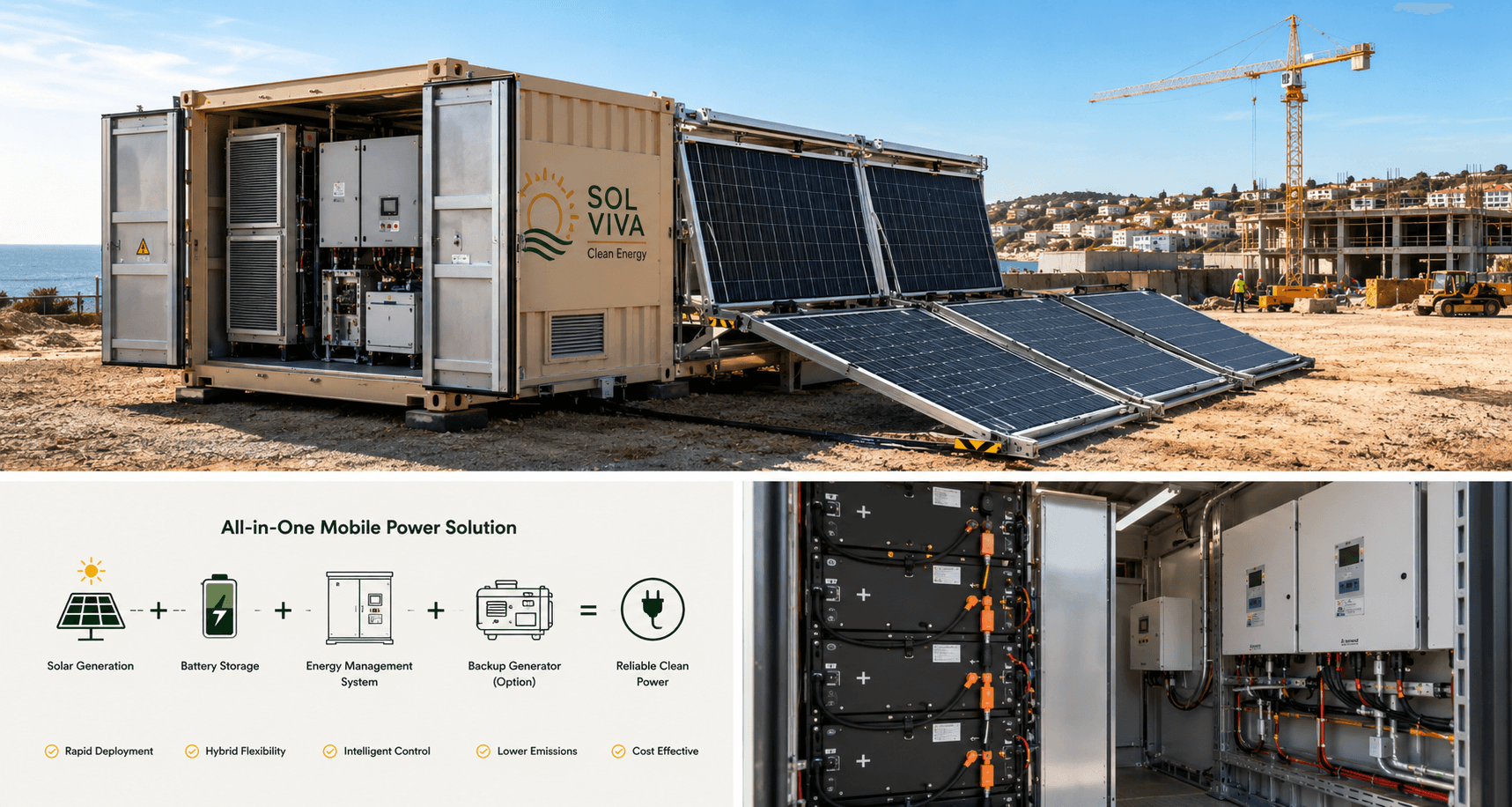
A mobile solar power container is a self-contained energy system housed within a transportable shipping container or modular enclosure.
Once delivered to a site, foldable or deployable solar panels can be unfolded and connected to integrated battery storage and power management systems. Depending on the design, these systems can operate independently, connect to the electrical grid, or work alongside backup generators as part of a hybrid energy solution.
The result is a portable power station that can be deployed significantly faster than a traditional fixed solar installation while maintaining many of the same benefits of renewable energy generation.
Why Is This Technology Gaining Attention?
Several global trends are driving interest in deployable solar microgrids:
1. Energy Resilience
Power reliability has become increasingly important for businesses, critical infrastructure and remote operations.
Mobile solar systems can provide backup electricity during outages and support operations in areas where grid connections are unavailable or unreliable.
2. Reduced Diesel Dependence
Temporary sites such as construction projects, remote facilities and events have traditionally relied heavily on diesel generators.
By combining solar energy with battery storage, mobile solar systems can significantly reduce fuel consumption, operating costs and carbon emissions while maintaining reliable power availability.
3. Faster Deployment
Traditional energy infrastructure can take weeks or months to design, build and commission.
Deployable solar systems can often be transported and operational within days, making them attractive for temporary or rapidly changing energy requirements.
4. Sustainability Goals
Many organisations are under increasing pressure to reduce emissions and improve environmental performance.
Portable solar microgrids offer a practical pathway towards cleaner energy without requiring permanent infrastructure.
Where Could These Systems Be Used?
The flexibility of mobile solar power technology creates opportunities across multiple sectors:
- Construction sites
- Infrastructure projects
- Emergency response operations
- Remote communities
- Agricultural facilities
- Mining and industrial operations
- Outdoor events and festivals
- Ports and logistics hubs
- Military and humanitarian deployments
- Temporary commercial facilities
In many of these environments, access to reliable electricity can be a major challenge. Mobile solar systems provide a scalable solution that can move as operational requirements change.
The Role of Battery Storage
Battery storage is a critical component of modern mobile energy systems.
Rather than relying solely on sunlight, batteries allow excess solar energy generated during the day to be stored and used later when solar production is lower or demand increases.
This improves self-consumption, reduces generator runtime and creates a more stable power supply.
At Sol Viva, we see battery storage as one of the most important developments in the wider energy transition. Whether in a residential property, commercial building or mobile microgrid, storage enables solar energy to be used more effectively and intelligently.
What Could This Mean for Portugal?
While mobile solar power containers are primarily aimed at industrial, infrastructure and remote applications, the technology highlights several broader trends that are also relevant for homeowners and businesses in Portugal.
These systems demonstrate the growing importance of:
- Energy independence
- Battery storage
- Intelligent energy management
- Hybrid power systems
- Renewable energy resilience
As battery technology continues to improve and costs continue to fall, many of the innovations first developed for specialised mobile applications eventually influence mainstream residential and commercial solar systems.
The same principles that make a portable solar microgrid effective—efficient solar generation, smart storage and intelligent control—are increasingly becoming standard features of high-performance energy systems for homes and businesses.
Looking Ahead
The future of energy is becoming more flexible, decentralised and resilient.
Mobile solar power containers are an example of how solar and battery technologies are evolving beyond traditional installations to meet new challenges and opportunities.
Whether powering a remote worksite, supporting critical infrastructure or reducing dependence on diesel generators, these systems demonstrate how renewable energy can be delivered wherever it is needed.
As solar technology continues to advance, we expect to see more innovative applications that make clean energy accessible, reliable and practical in a wider range of environments.
Thinking About Solar for Your Property?
At Sol Viva, we help homeowners and businesses across Portugal design, install and optimise solar and battery systems that are tailored to their specific energy needs.
From solar feasibility analysis and custom system design to battery storage and ongoing performance monitoring, our goal is simple: help you reduce energy costs, improve energy independence and get the most value from your investment in clean energy.